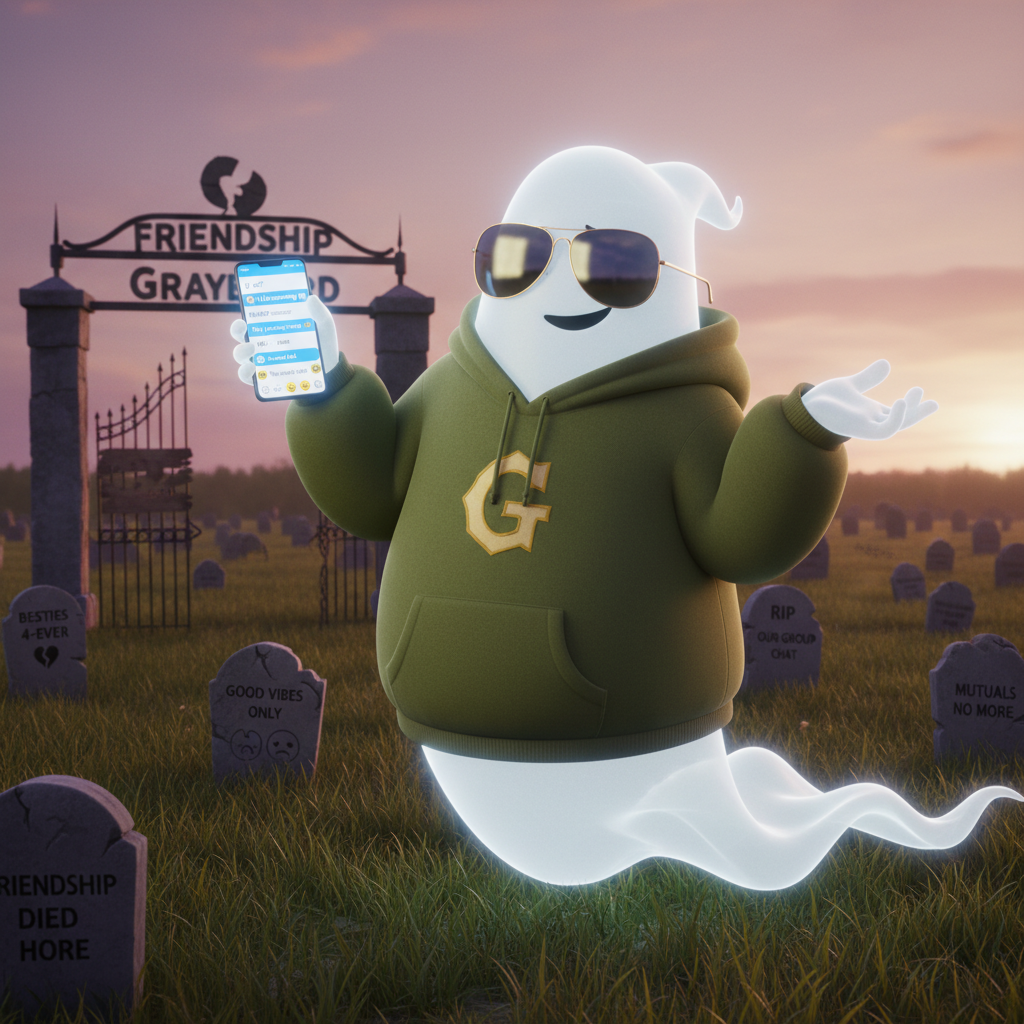
In today’s fast-paced, emotionally-stunted world, who has time for difficult conversations? Why bother with honesty and mutual respect when you can just… poof? Vanish into thin air? Welcome to the wonderful world of “ghosting,” the number one friendship-ending strategy for people who find authenticity just a little too cringey.
Let’s take a tour through the glorious justifications people use to abruptly cease all communication with someone they once called a “friend.”
Why Be a Grown-Up When You Can Be a Ghost?
It turns out there are a myriad of reasons people choose the path of the phantom, and shockingly, most of them are about avoiding feeling icky for a few minutes.
- The Dread of Talking: A leading cause of ghosting is, brace yourselves, the fear of having a conversation. Yes, using your words like an adult is just too much to ask. Some people would rather haunt their ex-friend’s every waking thought with questions of “what did I do?” than face a moment of potential conflict (Source: Psychology Today).
- It’s For Your Own Good, Apparently: Some ghosters tell themselves they’re doing it to “spare your feelings.” Isn’t that thoughtful? They believe a sudden, unexplained social death is somehow less painful than a direct, “Hey, I don’t think this is working out.” Research suggests this is just a self-serving lie to make themselves feel like a good person, but don’t tell them that (Source: Simply Psychology).
- It’s Just Science, Bro: If you believe people’s personalities are set in stone, you’re 63% more likely to endorse ghosting as a strategy (Source: Prof RJ Starr). People with these “fixed mindsets” and fearful-avoidant attachment styles are just predisposed to disappearing. It’s not them, it’s their… psychological profile. So convenient!
- The “High Self-Esteem” Exit: Think you’re a big shot? A 2023 study found that people with higher self-esteem might be more inclined to ghost, possibly because they believe friends are as disposable and replaceable as last season’s sneakers (Source: Telematics and Informatics, via Simply Psychology).
- The One (and Only) Semi-Valid Reason: Okay, fine. If your “friend” is toxic, manipulative, or abusive, ghosting can be a necessary act of self-preservation (Source: TIME). For this one scenario, you get a pass. Vanish away.
The Emotional Hangover of Haunting
Think ghosting is a clean break with no consequences? Oh, you sweet summer child. It turns out that being treated like you never existed has a psychological impact. Who could have possibly guessed?
For the Ghosted: Your brain processes the pain of being ghosted much like physical pain. It’s a delightful cocktail of rejection, self-doubt, isolation, and a complete lack of closure that can lead to long-term alienation and depression (Source: Tandem Psychology). But hey, at least your former friend didn’t have to send an uncomfortable text!
For the Ghoster: You’re not off the hook. A 2023 study revealed that people who ghost their friends actually experience increased depressive tendencies four months later. It seems that avoiding emotional responsibility doesn’t actually make you happy in the long run. Shocking, I know. In a truly bizarre twist, another study suggested ghosters might secretly care about the person they vanished on and are just… bad at showing it? (Source: Journal of Experimental Psychology, via Psychology Today). Sure, Jan.
So, What Now?
If you’ve been ghosted, the experts advise you to find “internal closure” and remember it’s about their avoidance issues, not your worth. Reconnect with people who actually remember you exist. You can try a “low-pressure” message, but honestly, don’t hold your breath (Source: Psychology Today).
If you’re contemplating ghosting, here’s a wild idea: don’t. Unless your safety is at risk, try using your words. Research shows it’s better for your own mental health to just be honest. It’s a radical concept, but maybe give it a shot (Source: Psychology Today).
In the end, ghosting is the modern way of saying, “I lack the emotional maturity to handle this situation.” It’s an easy out that leaves a trail of confusion and depression for everyone involved. So brave. So stunning.
Sources:
- Psychology Today: “Why Do We Feel Haunted After Being Ghosted by a Friend?”
- Tandem Psychology: “Understanding the Psychological Impact of Ghosting”
- Prof RJ Starr: “Ghosting: Why People Disappear and the Psychology of Avoidance”
- Simply Psychology: “Reasons You’ve Been Ghosted”
- TIME: “Friendship Ghosting: Why Friends Cut Off Relationships”
Leave a Reply